


NEWS CENTER
—
NEWS CENTER
—
Aluminum Sliding System Hardware Explained: From Fork Transmission Handles to Integrated Locking Systems
2026-09-11 14:13:50
Click:
“
Technical deep-dive into component-level functionality: how fork transmission handles synchronize multi-point locking, compatibility with thermal-break aluminum profiles, load-bearing standards, and precision alignment requirements for smooth 100,000+ cycle operation.
”

Fork Transmission Handle: The Core Synchronizing Mechanism in High-Performance Aluminum Sliding Systems
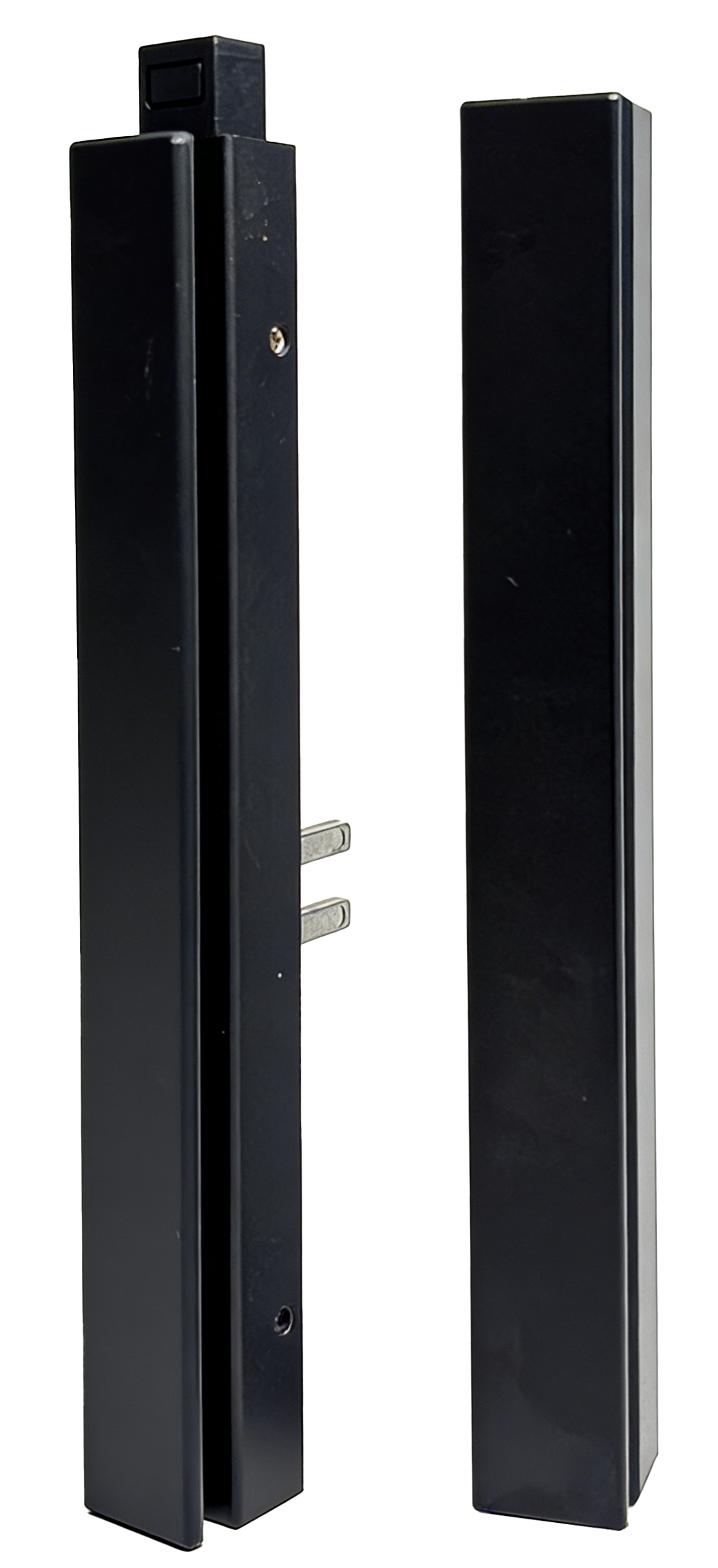
The fork transmission handle serves as the central actuation component in premium aluminum sliding systems, enabling precise, simultaneous engagement of multiple locking points across the entire panel height. Unlike conventional single-point actuators, this mechanism features a rigid, multi-branch lever assembly—typically fabricated from die-cast zinc alloy or austenitic stainless steel—that converts rotary input (from an aluminum window handle or aluminum door handle) into linear motion at two or more discrete locations. Each fork arm connects to a dedicated sliding door latch via reinforced stainless steel rods, ensuring sub-millimeter phase alignment and load distribution under operational stress.
Multi-Point Locking Synchronization and Load Distribution
Synchronization is achieved through geometric constraint and mechanical rigidity: the fork structure eliminates play by restricting degrees of freedom to pure translation along the locking axis. When the aluminum window handle is rotated 90°, the fork transmits identical displacement to all connected sliding window lock for aluminum profile units, activating hook bolts, anti-lift pins, and side compression blocks in concert. This coordinated action meets EN 1627–1630 resistance class RC2–RC4 requirements and ensures uniform seal compression across the gasket profile, critical for air and water tightness (DIN EN 1027).
Thermal-Break Compatibility and Structural Integration
Modern fork transmission handles are engineered for direct integration with thermally broken aluminum profiles. Mounting hardware includes insulated spacer plates and non-conductive fasteners to preserve the thermal break integrity without compromising structural stiffness. The handle base and fork housing feature precision-machined interfaces that align with standard profile grooves (e.g., Roto Nordic, Siegenia Aubi, or custom 6060-T6 extrusions), allowing flush mounting within the frame depth while maintaining ≥8 mm clearance to the thermal break barrier. This design prevents cold bridging and ensures long-term dimensional stability under thermal cycling (−30°C to +70°C).
Load-Bearing Standards and Cycle Durability
Fork transmission assemblies must comply with EN 14351-1 for load-bearing performance and EN 13126-7 for operational endurance. Certified systems are tested to withstand ≥1,200 N static load on the handle lever and ≥300 N·m torque at the drive shaft without permanent deformation. For 100,000+ cycle operation, components employ hard-anodized aluminum levers, self-lubricating polymer bushings (e.g., PIB or PTFE-filled POM), and corrosion-resistant stainless steel linkage rods (A4-80, passivated). Backlash is controlled to ≤0.15 mm through preloaded ball bearings and adjustable limit stops, guaranteeing repeatable locking positioning over decades of use.
Precision Alignment Requirements and Installation Tolerances
Achieving smooth, noise-free operation at high cycle counts demands strict adherence to alignment tolerances. The fork transmission axis must be parallel to the sliding track within ±0.2°, and vertical offset between latch points must not exceed ±0.3 mm over a 3-meter span. Installation requires laser-guided setup, torque-controlled fastening (5.5 N·m ±0.3 N·m for M5 stainless screws), and dynamic validation using a digital force gauge to verify actuation effort ≤25 N throughout the full stroke. Misalignment induces binding, uneven wear, and premature failure of the sliding door latch or sliding window lock for aluminum profile.
Creation Statement: Content is generated by AI based on technical references, industry standards, and engineering best practices. Please review all specifications against project-specific requirements and certified manufacturer documentation before implementation.
Author:
KOLLY Door and Window Hardware Factory
0
Related news
-

top How to Choose the Right Sliding Window Lock for Energy Efficiency and Security
ntroduction: Discuss the common issues of drafty rooms and security concerns with older sliding windows. The Problem: Explain how worn-out or poorly fitted locks compromise both insulation and safety. The Solution: Introduce the importance of high-quality, precision-engineered sliding window locks.
-
Fork‑Transmission Handle: Core Operating Hardware for Aluminium Sliding Door Systems
Many buyers overlook fork‑transmission handle when sourcing sliding door hardware. Based on factory practical experience, this article talks about its structure, common fitting mistakes and real‑project application.
Kolly Hardware Factory -
How to Choose Reliable Sliding Door Lock for Aluminum Sliding Doors
Meta‑Description:Looking for durable sliding door lock? KOLLY introduces key selection points for aluminum sliding door locks for building project and wholesale buyers.
Kolly Hardware Factory -
Aluminum Sliding System Hardware Explained: From Fork Transmission Handles to Integrated Locking Systems
Technical deep-dive into component-level functionality: how fork transmission handles synchronize multi-point locking, compatibility with thermal-break aluminum profiles, load-bearing standards, and precision alignment requirements for smooth 100,000+ cycle operation.
-
Sliding Door & Window Fittings Performance Benchmark Report: Durability, Corrosion Resistance & Thermal Efficiency
Data-driven comparison of leading hardware solutions tested under ASTM B117 salt-spray (≥1000 hrs), EN 1527 cycle testing (100,000+ operations), and thermal break compatibility assessments — with application guidance for coastal, high-humidity, and extreme-temperature environments.
-
Custom & ODM Aluminum Window & Door Hardware: From Prototype to Mass Production
End-to-end workflow for bespoke hardware development — including CAD-supported design iteration, surface treatment (powder coat, electroplating, wood grain transfer), IP protection, MOQ flexibility, and rapid prototyping timelines — tailored for premium façade systems and branded product lines.



Work Time:AM9:00-PM18:00
contact:400-000-0000
Address: Room 1801, xxxBuilding, Guangzhou, Guangdong

Public Account
Home | Product Center | Contact | About Us
 Tel: +86 15015722806
 Email: Jason@zeniktech.com
 Address: Sanjia Development Zone, Jinshaxilian, Danzao Town, Nanhai District,
Foshan, Guangdong, China

Copyright @ VillaGrandis All Rights Reserved ICP Registration No. 180006020-3
